
Local governments are increasingly expected to maintain a strong and effective online presence. The availability of online services enhances accessibility and also fosters transparency and engagement with residents. Studies reveal that 85% of citizens expect government services to be available online, highlighting the critical need for digital transformation in public administration.
(Source)
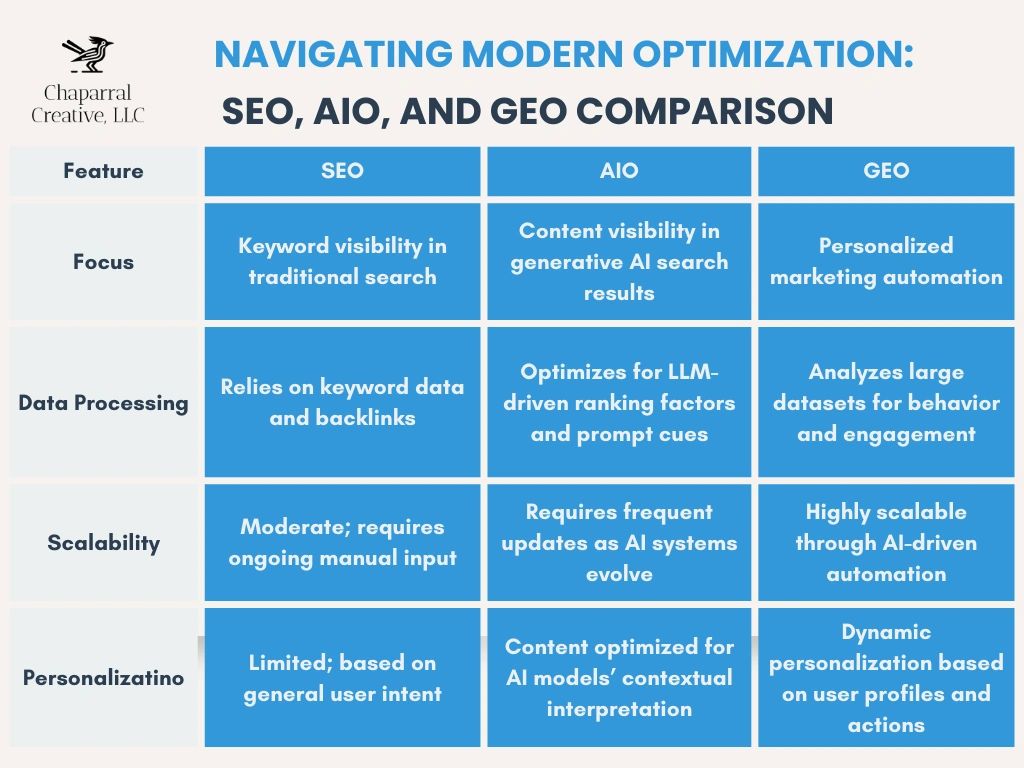
This white paper explores three interrelated digital strategies that will impact the way local government organizations serve their communities: Search Engine Optimization (SEO), Artificial Intelligence Optimization (AIO), and Generative Engine Optimization (GEO). SEO involves optimizing website content to rank higher in search engine results, which improves both visibility and accessibility. AIO leverages artificial intelligence to personalize and streamline user interactions which can enhance the usability of government portals. GEO is relates to the current visibility within generative search environments like Google SGE or Bing Copilot.
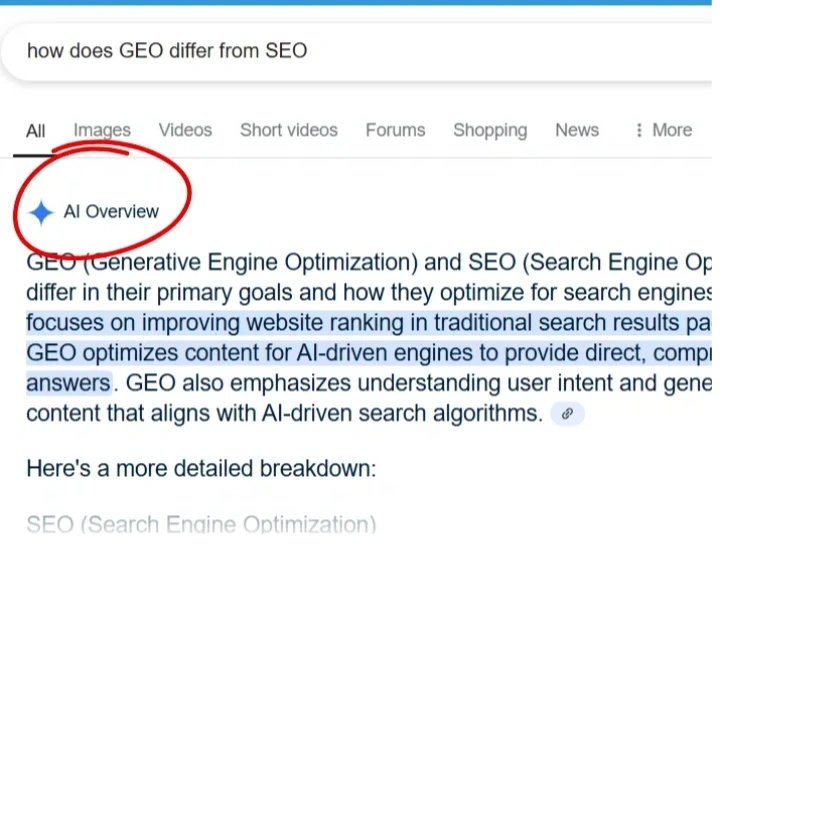
GEO is becoming more important as AI search engines prioritize structured, conversational content. As a local government, beginning your preparation for this coming change can improve service discoverability, reduce misinformation risks, and strengthen trust.
These technologies also address a growing challenge in the public domain—the insane amount of misinformation online. By establishing credible, authoritative digital platforms, local governments can counteract false narratives and provide trustworthy information to residents, visitors, and business owners.
This document examines how SEO, AIO, and GEO contribute to credibility, usability, economic development, operational efficiency, and offers a free implementation guide with case study examples included!
Establishing Credibility and Combating Misinformation Through SEO
Building trust with constituents is paramount for local governments, and SEO serves as a powerful tool to enhance credibility online. By optimizing website content with relevant keywords and authoritative information, government websites can rise in search engine rankings, making reliable sources more accessible than misinformation-filled pages.
Research shows that websites appearing on the first page of Google capture approximately 92% of all search traffic (Source). This highlights the strategic value of SEO for local governments wishing to control the narrative around policies, initiatives, and services.

Enhancing Usability for Residents and Visitors with AIO
Artificial Intelligence Optimization (AIO) will continue to shape how local governments deliver digital services by refining website usability and providing personalized interactions. AI-powered tools can analyze user behavior and preferences to anticipate needs, making online portals more intuitive and responsive.
One popular AIO application is the use of chatbots and virtual assistants, which provide instant responses to common questions around the clock. According to IBM, chatbots provide a better user experience while also empowering residents to independently access basic information. (Source).
Beyond simple FAQ bots, sophisticated AI systems offer dynamic content by considering user location, previous interactions, and real-time data. For example, a resident accessing a city website from a specific neighborhood might receive highlighted information about local road work, events, or public health announcements pertinent to their area.
This intelligent personalization drives engagement while ALSO enhancing user satisfaction! Overall, this reduces frustration caused by difficult navigation or irrelevant information.
Thus, organizations adopting AIO solutions are more prepared to meet the growing expectations and needs of digitally savvy residents and visitors.
SEO, AIO, and GEO for Attracting New Businesses and Visitors
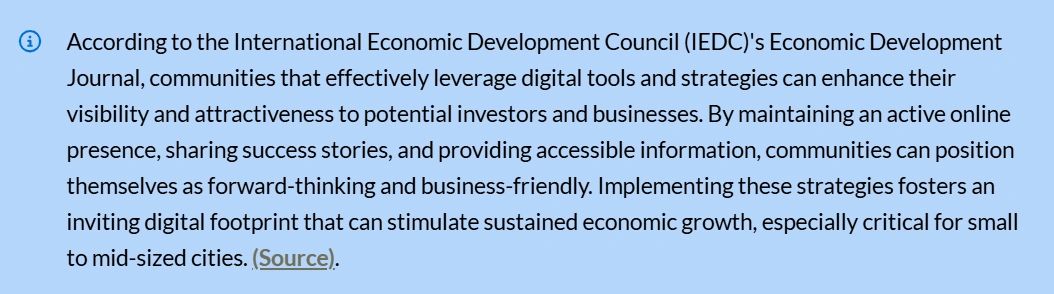
Managing an online presence powered by SEO and GEO is an essential driver for economic viability in local communities. By optimizing digital content to highlight infrastructure, quality of life, and business incentives, governments can attract businesses looking to relocate, entrepreneurs with start up companies, and tourists more effectively.
- SEO (Search Engine Optimization) techniques and strategy lays the overall groundwork by aligning website content with the specific search queries used by website users. Strategic keyword placement, metadata structuring, and content hierarchy ensure that the community ranks well on high-impact topics such as available site locations for businesses, prospective visitor information, and local attractions. This foundational visibility is essential for drawing traffic from search engines and positioning your community online.
- AIO (AI-Optimized Content) enhances traditional SEO by introducing intelligent recommendations. AIO delivers tailored digital experiences based on user behavior, intent, and preferences, rather than relying solely on static content. As an example, this could include highlighting workforce programs or site selections to potential business owners, residents, and visitors. Through the use of integrated analytics and behavioral data, AIO guides continuous content refinement, keeping the site engaging and relevant while boosting return visits and engagement.
- GEO (Generative Engine Optimization) extends the reach even further by ensuring that your content is discoverable and useful to generative AI tools such as ChatGPT, Bing Copilot, and Google Gemini (see screenshot for an example above). Business owners, prospective visitors, and residents use these tools to gather insights, so local governments need to adapt their digital content to be AI-ready. This includes using schema markup, natural conversational phrasing, and structured content designed to directly answer common queries. GEO ensures your community’s unique story is part of the conversation (quite literally, haha) when AI tools are asked to recommend places to invest, visit, or choose to live.
Best Practices and Implementation Strategies
Successful and strategic integration of SEO, AIO, and GEO requires a phased approach tailored to the specific needs of local government organizations. A lack of resources, staff demands, and (many) more, prove challenging for any local government organization looking to make these changes. However, you can click below right now to receive a step-by-step guide to assist with both knowledge and awareness as well as a tactical and strategic approach to implementation.
To begin, current digital assets, along with resident needs, are thoroughly assessed, followed by selecting appropriate tools and platforms (such as content management systems optimized for SEO, AI chatbot frameworks, and geolocation APIs). Partnering with experienced consultants may accelerate deployment and knowledge transfer.
Monitoring and measuring success are critical components used to ensure that the digital services are actually meeting evolving expectations. Tools like Google Analytics provide rich data on user traffic and engagement patterns. This data is then used for continuous optimization. This is not a “set it and forget it method.” It takes continuous oversight and analysis to stay on top of the story the data tells. Key performance indicators should include search rankings, engagement and traffic pattern analysis, ChatBot interaction success rate, and location-based service usage metrics.
It is likely that local government organizations will begin prioritizing staff training to manage and leverage these technologies. However, while an experienced team member might be capable of accomplishing these objectives, the impact to the respective budget might be a harder pill to swallow.
The Future of Local Government in the Digital Age
The transformative impact of SEO, AIO, and GEO technologies presents an era of opportunity for local government organizations. These digital tools empower municipalities to become a source of truth by offering credible information, enhance the user experience of website visitors, stimulate economic impact and development, and streamline internal workflows.
Investing in digital infrastructure is imperative for the future of local governments organizations as they strive to meet the demands of their respective communities. Embracing these technologies strategically will better position municipalities and counties to serve residents efficiently, spur the local economy, and maintain (or even gain?) public trust and confidence.
Looking ahead, the integration of emerging technologies like AI-driven predictive analytics, real-time geospatial intelligence, and voice search optimization will further elevate the capabilities of local government websites and services. The continued digital evolution promises more personalized, responsive, and inclusive experiences.
We encourage leaders to prioritize comprehensive digital transformation initiatives to include SEO, AIO, and GEO. This type of forward thinking will create resilient, connected, and thriving communities for the future.
Thank you for reading and please do not hesitate to let me know if I can ever be of help!
Sincerely,